


It’s all about making sure you feel protected, listened to and cared for at home, at school and anywhere else you go. Safeguarding helps adults notice when something might be wrong and make sure you get the help you need. It also means teaching you about staying safe and knowing who to talk to if you’re worried about anything. Safeguarding is there to make sure you can grow, learn and have fun in a safe and happy environment.
Do you have a worry but feel like you can't talk to anybody about it? Click  to report it to school...


There are lots of different ways, but one of the main things is making sure the staff here at Webster know how to keep you safe.
All staff, including your teacher are here to help you. In fact, Mr Proudlock’s main job is to support young people and their families if there are any problems.
Safeguarding and Child Protection mean the same thing - that we look after our children and keep them safe!

Here are some examples of things that are not ok. They can be divided into 4 categories...
Physical
Hitting, smacking, shaking, throwing, burning, biting etc.
Emotional
When somebody upsets you or makes you feel bad. If someone in your family says
horrible things to you and makes you feel sad or worthless.
Neglect
Not providing things like meals, warmth, clothing, or perhaps
not taking you to the doctors when you need to go.

Other
Inappropriate touching, making you watch things that children shouldn’t be watching
or encouraging you to act in a way that makes you feel uncomfortable.

...sometimes these things can happen online too, which is still NOT ok!

If you ever feel like any of the examples might be happening to you, or if something does not feel right then talk to somebody.
You can talk to a trusted adult at home or in school. Examples of people you can tell in school are:
-
-
-
-
-
-
-
-
-
-
-
- Your class teacher or teaching assistant
- Ms Rauf or Miss Allen
- Mr Proudlock or Mrs Mills
- A Lunchtime Organiser
- …or anybody who you feel most comfortable telling!
-
-
-
-
-
-
-
-
-
-

Sometimes a member of staff might need to speak to somebody else, but everything will be done to KEEP YOU SAFE!

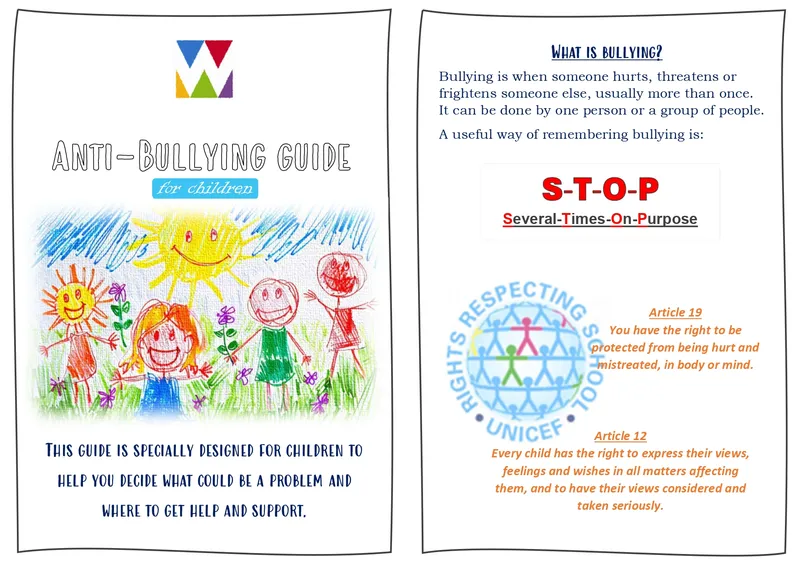
Here is our Anti-bullying guide, helping you to understand what might be a problem and where to get help...
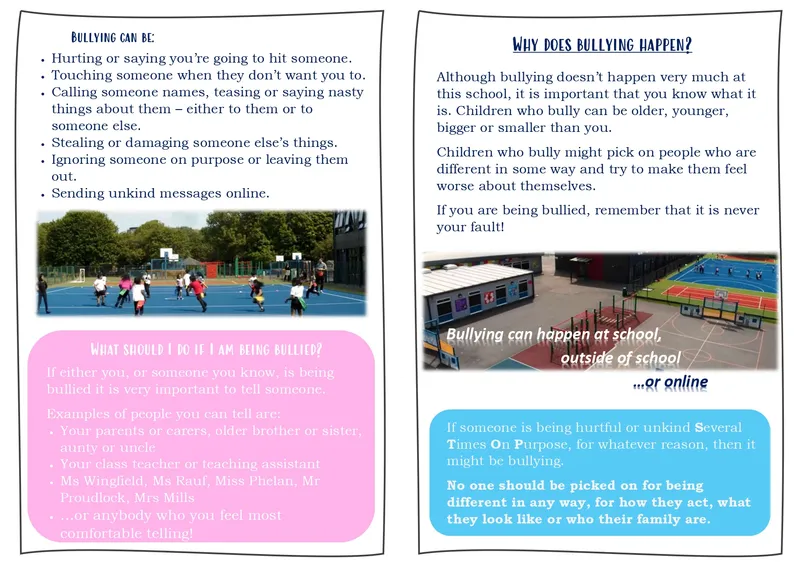

Follow these SMART rules to stay safe online!
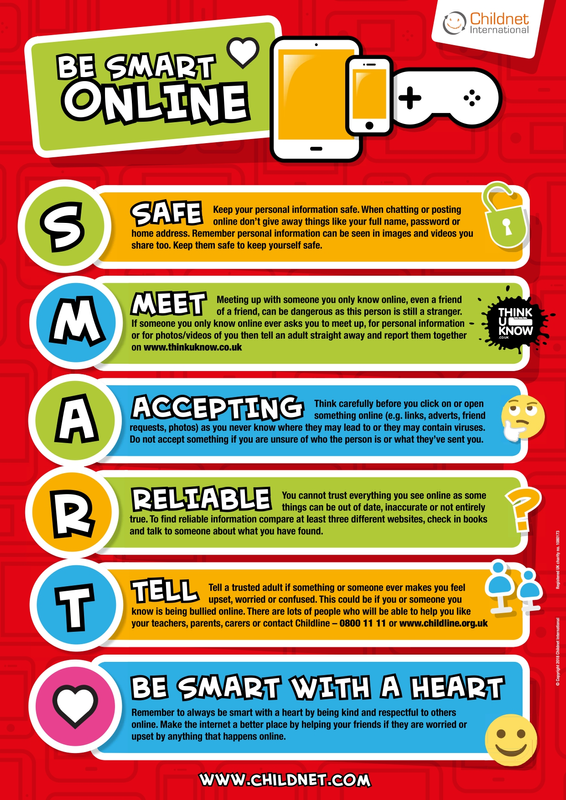

Your underwear covers up your private parts and no one should ask to see or touch them. Sometimes a doctor, nurse or family members might have to. But they should always explain why, and ask you if it's OK first. Remember, what's in your pants belongs only to you.


Click the logos to find out more
 ThinkUknow
ThinkUknow is a fantastic site for learning how to keep safe while on the internet.
Click the icon above to find their homepage, then click on your age group where you will find lots of games, videos and activities.
If you have any concerns about cyber-bullying, do let us know at school and we will help!

CEOP Internet Safety Centre
CEOP helps children who are being pressured, forced or tricked into taking part in things that are not ok. This can be something that has taken place either online or in ‘the real world’, or both.
The CEOP Safety Centre has clear information and advice on what can be reported, the reporting process and what will happen if you do decide to make a report.
You can visit the CEOP Safety Centre and make a direct report by clicking the CEOP button above.

The NSPCC launched a helpline for children and young people who have experienced abuse at school, including anything that's happened in the past.
Call the NSPCC helpine, Report Abuse in Education on 0800 136 663 or email help@nspcc.org.uk.


